

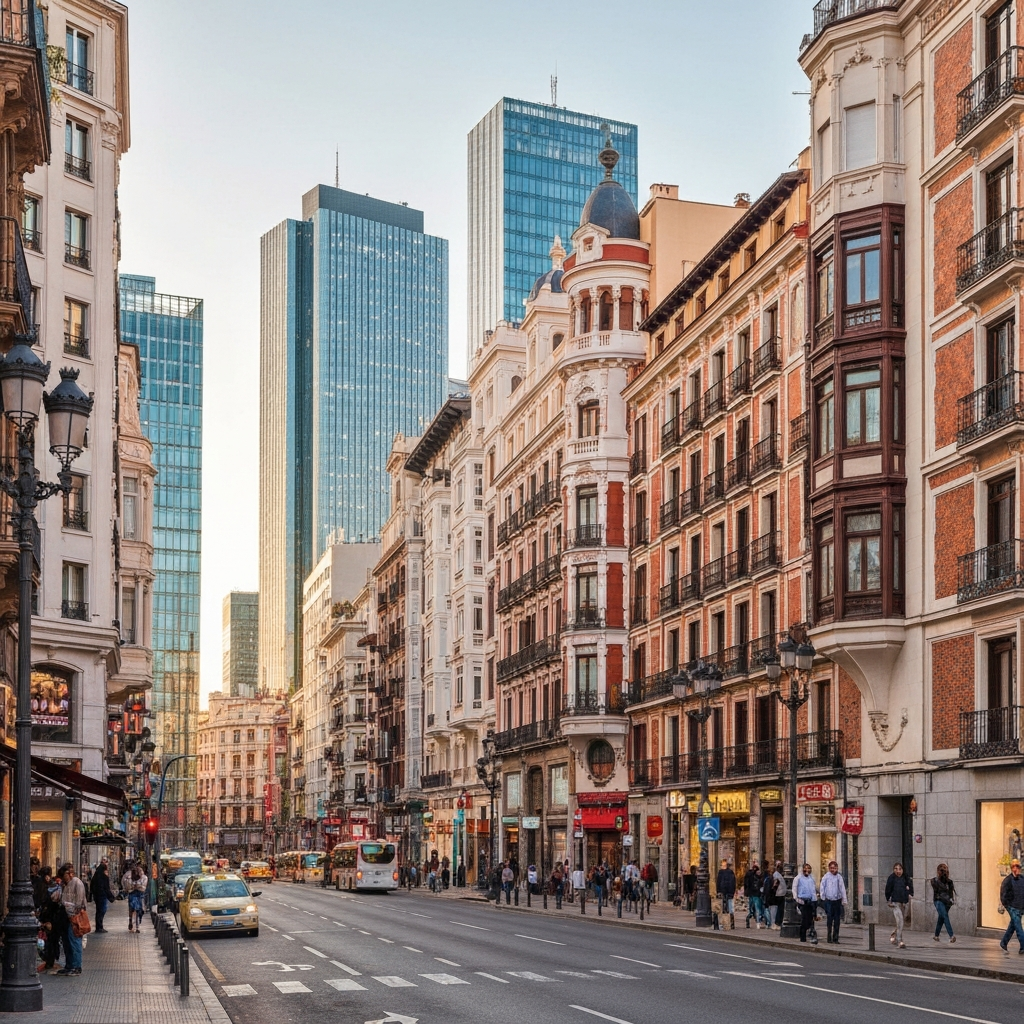
Madrid’s real estate market continues to evolve, presenting both challenges and opportunities for residents and investors alike. Understanding the current trends in rentals, home buying, and local development is essential for making informed decisions.
Rental Market Dynamics
The demand for long-term rentals in Madrid remains robust, leading to low vacancy rates and rising rents. Central districts such as Salamanca, Centro, and Chamberí have vacancy rates below 2%, with properties renting within 7 to 20 days on average. Rents have increased by approximately 10% to 12% into 2026, with average rates around €23 per square meter per month. This translates to roughly €800 for studios, €1,150 for one-bedroom apartments, and €1,700 for two-bedroom units. Notably, digital nomads, expatriates, and young professionals constitute about 25% to 30% of tenants in these central areas.
Home Buying Considerations
For those looking to purchase property, Madrid’s market presents a competitive landscape. As of March 2026, the average price for residential properties stands at €6,717 per square meter, marking a 15.27% increase from the previous year. The luxury segment has seen even more significant growth, with prices in exclusive areas like the Barrio de Salamanca reaching up to €18,000 per square meter.
Despite these rising prices, buyer demand remains strong, driven by factors such as foreign investment, domestic migration, and improved mortgage affordability. However, the supply-demand imbalance is particularly pronounced for new-build properties, with many units being pre-sold before construction completion. This dynamic has led buyers to turn to the resale market, further inflating prices across all property types.
Local Development Initiatives
In response to the housing demand, several development projects are underway. The Community of Madrid has launched initiatives like the Plan Vive, aiming to deliver over 15,000 affordable homes by 2027. However, as of early 2026, only 5,300 units have been completed, highlighting the challenges in meeting the city’s housing needs.
Additionally, the city is witnessing the emergence of new neighborhoods and urban renewal projects designed to accommodate the growing population and provide modern amenities. These developments aim to balance the preservation of Madrid’s historical charm with the demands of contemporary urban living.
Conclusion
Madrid’s real estate market is characterized by high demand and limited supply, leading to rising prices in both the rental and purchase sectors. Prospective renters and buyers should stay informed about market trends and consider both established and emerging neighborhoods to find opportunities that align with their needs and budgets. As the city continues to develop, ongoing and future projects may offer additional options for housing in the near future.