

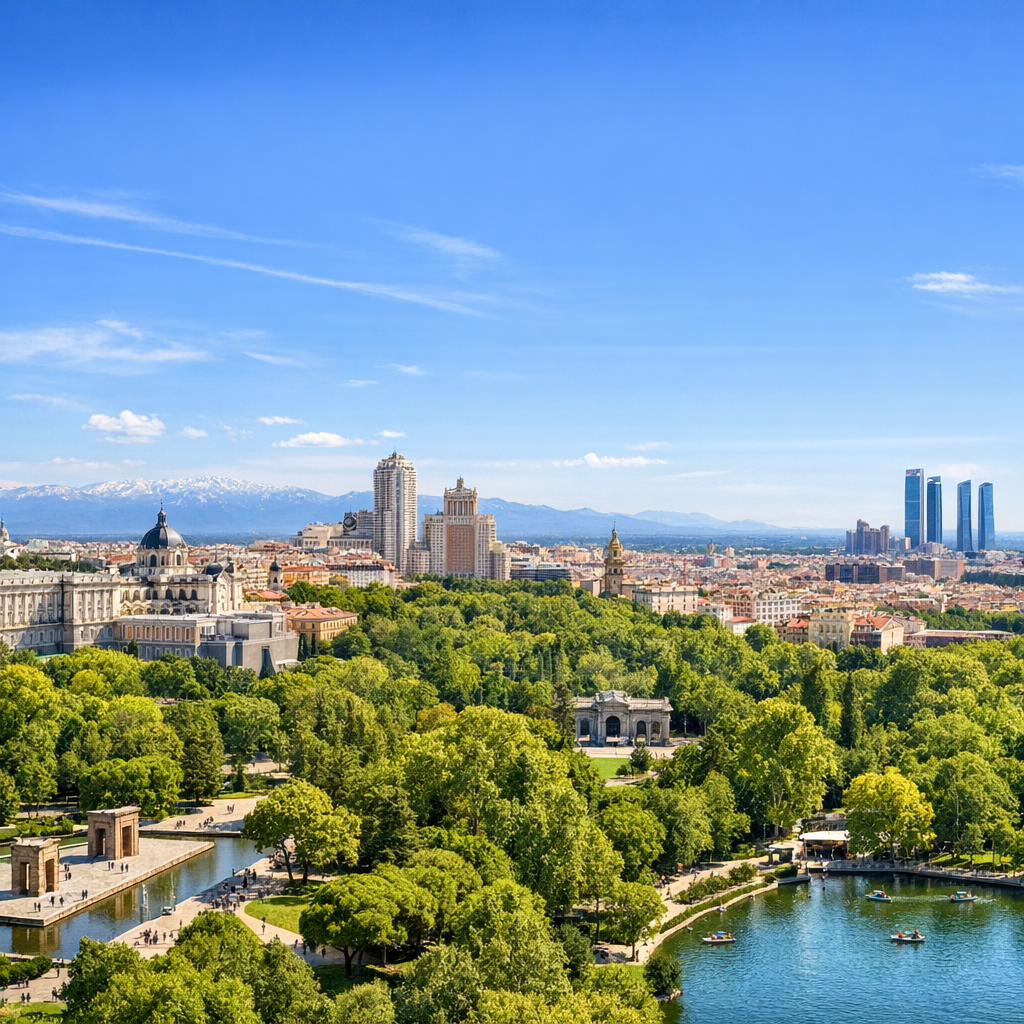
Madrid has been actively implementing various environmental initiatives aimed at improving air quality, expanding green spaces, and promoting sustainable practices. These efforts are crucial in addressing the challenges posed by urbanization and climate change.
Enhancing Air Quality
The city has made significant strides in reducing air pollution through the implementation of the Madrid 360 strategy. This comprehensive plan includes measures such as restricting traffic in central areas, promoting the use of public transportation, and encouraging the adoption of cleaner vehicles. As a result, Madrid has met the European Union’s air quality standards for three consecutive years. However, further efforts are needed to comply with the more stringent targets set for 2030.
Expanding Green Spaces
To combat the urban heat island effect and provide residents with more recreational areas, Madrid is developing the Bosque Metropolitano, a 75-kilometer green belt encircling the city. This project aims to restore degraded areas, enhance biodiversity, and offer new spaces for walking and cycling. The Bosque Metropolitano will be composed of native species such as holm oaks, pines, and strawberry trees, contributing to the city’s ecological and aesthetic value.
Promoting Sustainable Practices
Madrid is also focusing on waste management and recycling to foster a circular economy. The city’s new waste strategy, with a horizon set for 2030, emphasizes increasing recycling rates and reducing landfill usage. This approach includes initiatives to minimize waste generation, improve waste separation, and enhance public awareness about the importance of recycling.
These initiatives reflect Madrid’s commitment to creating a more sustainable and livable urban environment. Continued efforts and community engagement are essential to achieve the city’s environmental goals and ensure a healthier future for all residents.