

By Sofía Sánchez
It’s been over a year since Madrid’s “Plan Regenera” began, and the early signs suggest it’s more than just another municipal program—it may be redefining how public space, cohesion, and accessibility work in the city’s neighborhoods.
What Is Plan Regenera?
Launched by the city’s Housing Policy department, Plan Regenera aims to recover and transform spaces long overlooked—especially those between apartment blocks (“interbloques”)—in neighborhoods built before about 1985. It focuses on areas that combine neglect, restricted legal status, and limited public services. Key goals include renovating public spaces, ensuring safe access for emergency services, and improving environmental and social sustainability.
Work began in southern districts like Villaverde and Moratalaz, but the plan is now rolling out across all 21 districts.
Visible Changes in the Neighborhoods
Some of the most tangible signs so far: in Villaverde, the surroundings of CEIP Sagunto have been rebuilt—over 11,000 square meters now support safer, greener spaces for students and neighbors; spaces are more accessible with smoother walkways, better lighting, and shaded areas.
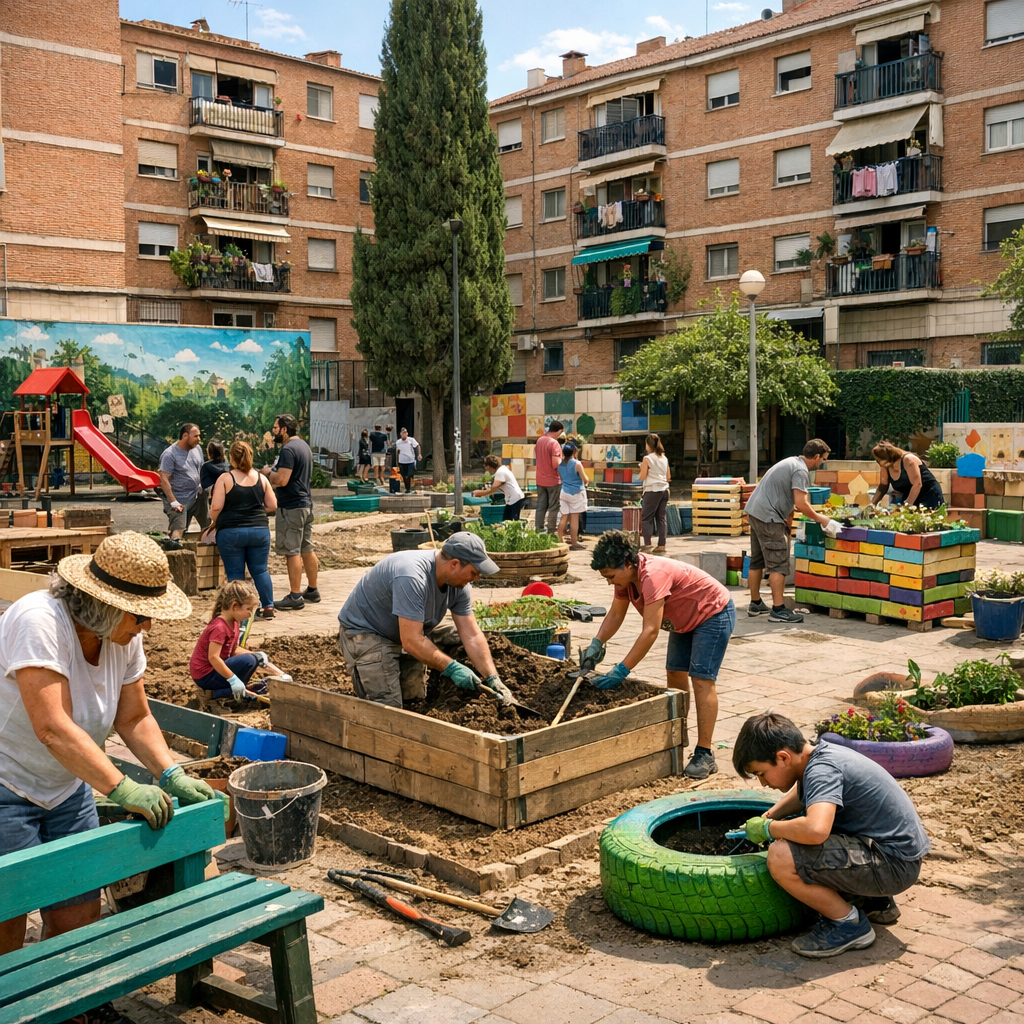
Residents in districts like Moratalaz also report that interblock zones they once considered wasted or unsafe are being transformed: patches of concrete replaced with soft landscaping, seating, and better drainage.
Why It Matters
- Rebalancing inequities. Many districts in the south and east of Madrid have long lagged behind in infrastructure and public comforts. Plan Regenera’s wide coverage aims to close these gaps.
- Legalizing vital spaces. Interblock areas often exist in legal limbo, limiting improvements. The plan gives official backing so that work—installing sidewalks, lighting, or even playgrounds—can proceed without red tape.
- Strengthening community and health. Green, well-maintained shared spaces support well-being, social ties, and even physical activity, especially for children, older people, and those who work from home.
Challenges and What’s Next
Despite progress, some neighbors say delays are still frustrating. Paving, urban furniture, or lighting upgrades can stretch over months. Also, ensuring that improvements match each neighborhood’s specific needs—shade where sun exposure is worst, seating where people gather—is a logistical challenge.
The city has committed to expanding the plan to all 21 districts, with dozens of regeneration projects either completed or in progress. Success depends on maintaining momentum and making sure voices from every barrio are included in decisions.
How You Can Get Involved
If you live in Madrid and want to stay connected or make sure your neighborhood’s needs are heard, you can:
- Reach out to your Junta Municipal de Distrito to inquire about upcoming Regenera works in your area.
- Engage with local associations—many are mapping interblock zones, proposing improvements, or petitioning for safety features.
- Participate in public information sessions, which the city periodically convenes to gather feedback on proposed works.
Plan Regenera doesn’t offer the flashy headlines of major infrastructure overhauls—but its impact may be the kind that shapes daily life across Madrid, quietly elevating underserved barrios and reconnecting communities.