

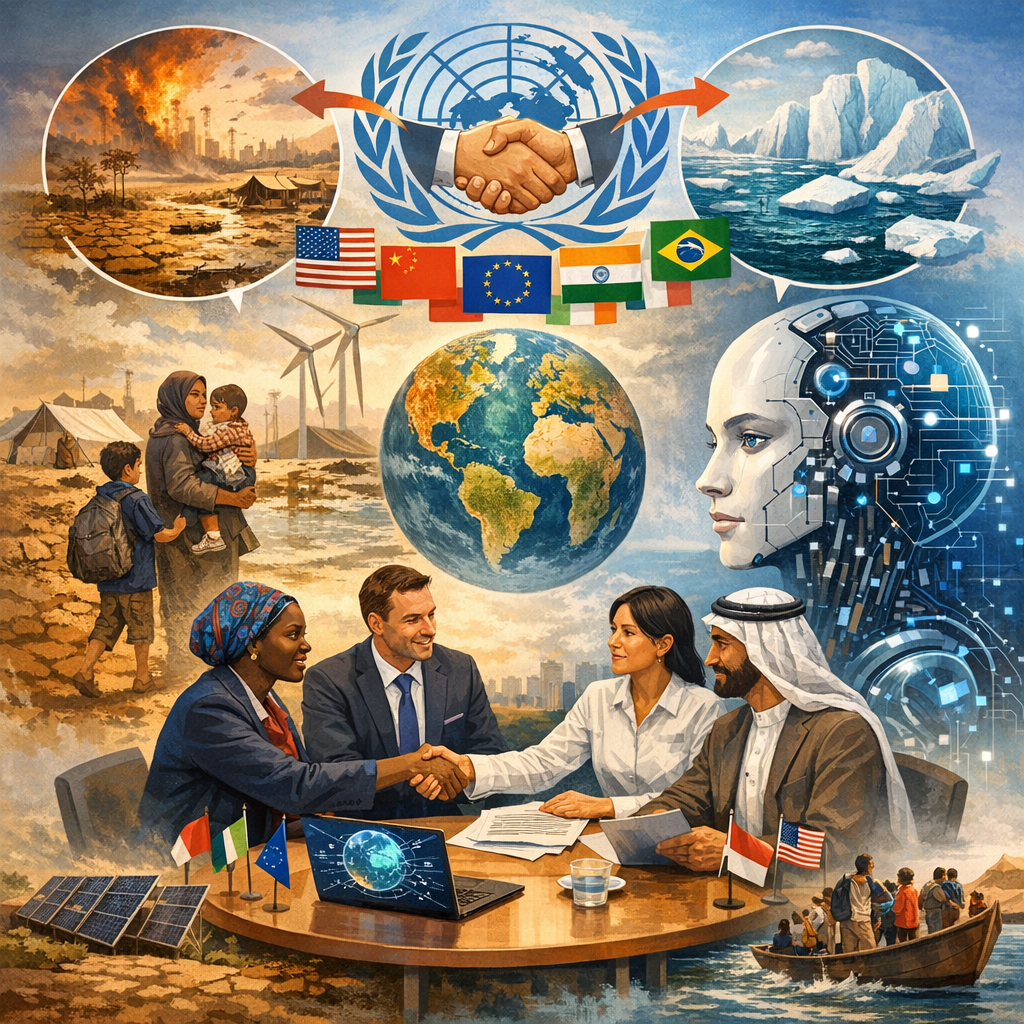
Global challenges such as artificial intelligence and climate migration are transforming both international relations and local lives. As regulations evolve and people cope with environmental disruption, understanding these shifts is crucial—not just for policies in Madrid or Spain, but for communities everywhere.
How Countries are Navigating AI Governance
Governments worldwide are stepping up efforts to regulate and shape the development of artificial intelligence. Recent reports show that more nations—especially those that previously had no formal AI policy—are crafting strategies to achieve what is called “AI sovereignty,” meaning they want more control over how AI is built and used in their territories. These initiatives acknowledge real risks including privacy violations, bias, and the dangers of opaque systems, while also balancing excitement about AI’s promise in healthcare, agriculture, education, and public services. The tools they use range from legal regulations to “soft law” like guidelines and principles, as well as regulatory sandboxes where new tech can be tested in controlled environments.
Meanwhile, China has released an action plan focused on international AI ethics governance. The plan promotes cooperation under principles like inclusive consultation, shared benefits, and responsible innovation. Emphasis is placed on protecting vulnerable groups, supporting developing countries, and bridging the digital divide. In parallel, calls from democracies—such as France—are pushing for greater sharing of AI capabilities and stronger regulation. The result is a growing patchwork of AI policies that reflect divergent values and priorities.
Climate Change and the Growing Reality of Climate Mobility
Movement driven by climate change is no longer a future concern—it’s already reshaping migration patterns worldwide. According to recent data, climate-related mobility is increasing due to both sudden disasters and gradual environmental decline. Yet many responses today remain reactive rather than proactive, lacking integration with adaptation strategies, development planning, and migration governance. Particularly, marginalized communities and vulnerable groups often fall through the cracks when policies fail to reflect local realities.
Projections suggest that internal migration within regions will increase in all climate scenarios across the globe. While international migration will also rise, it tends to lag behind due to legal, economic, and logistical barriers. The burden is likely to be heaviest on poorer and more vulnerable countries where environmental stress and demographic pressures overlap. Strengthening social protection systems, investing in climate-resilient infrastructure, and building local capacity emerge repeatedly as essential responses.
Why This Matters Locally—and What Can Be Done
For communities in Madrid and throughout Spain, these developments are not distant. AI governance debates influence data privacy laws, public sector software deployments, labor markets, and the kinds of services available. Decisions made at international forums ripple into national policy, and from there into your neighborhood.
Climate mobility has direct effects too. Spain is a destination for migrants fleeing climate stress in other countries, and must prepare through policy and infrastructure. Simultaneously, regions within Spain may face internal population shifts due to environmental changes, requiring local adaptation.
Practical steps could include fostering public awareness of AI’s ethical dimensions, implementing transparent oversight mechanisms, investing in local digital education—so communities are prepared—and strengthening networks between municipal governments, regional authorities, and civil society to anticipate migration flows and share burden fairly.
As AI and climate mobility deepen their global rolls, they will continue reshaping geopolitics, economies, and everyday life. Understanding their trajectories, and planning with both fairness and foresight, is essential for a resilient and inclusive future.